2026-10-08 · Daniel Martinez
Common AC Issues During Las Vegas Summer Heat Spikes
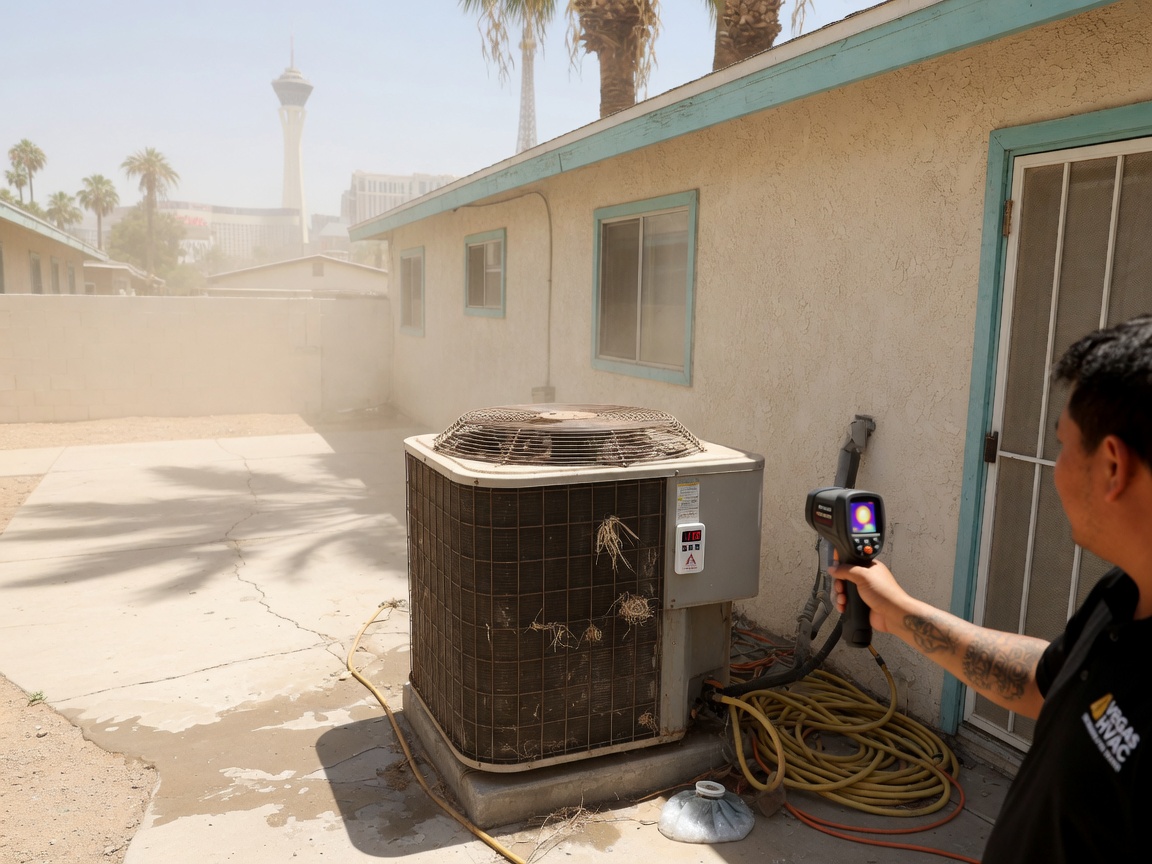
Las Vegas heat spikes above 110°F for multiple days in a row commonly trigger compressor overheating, low refrigerant pressure from accelerated leaks, and clogged filters from desert dust, with units in single-story homes across Clark County often showing these symptoms within 48 hours of sustained highs.
Compressor Overload From Extended High Temperatures
In Las Vegas, when daytime highs remain above 108°F for three or more consecutive days, the compressor runs nonstop and internal temperatures climb past safe limits. Homes in Summerlin and Centennial Hills with older 3–4 ton units experience short cycling as thermal overload switches trip, cutting cooling for 30–90 minutes at a time. The hot desert climate also raises discharge line temperatures, which hardens rubber seals and increases the chance of refrigerant leaks at flare fittings. Technicians frequently find capacitors failing first because the 115–120°F attic air shortens their lifespan to 4–6 years instead of the typical 8–12. Checking capacitor microfarad ratings and cleaning condenser coils before each heat wave prevents most of these shutdowns.
Airflow Restrictions From Dust and Debris
Desert dust carried by afternoon winds settles on evaporator coils and return filters faster during heat spikes because systems run 18–22 hours daily. In Spring Valley and the Arts District, homes built in the 1990s often have undersized return grilles that restrict airflow once filters load with fine silt. Restricted airflow drops suction pressure below 60 psi, causing the evaporator coil to ice over even when outdoor temperatures exceed 105°F. Regular filter changes every 3–4 weeks during June through September and annual coil cleaning keep static pressure within the 0.5–0.8 inch water column range most central systems need. How Desert Dust Affects AC Filters In The Las Vegas Valley explains the seasonal timing in more detail.
Refrigerant Leaks Accelerated by Thermal Expansion
Copper lines in Las Vegas attics expand and contract daily when attic temperatures swing from 130°F at 3 p.m. to 85°F at 5 a.m. Over time these cycles loosen flare nuts and create pinhole leaks at the evaporator coil header. During a heat spike the system loses 0.5–1.0 pound of refrigerant per week, dropping capacity 15–20% and raising indoor humidity. Technicians recover and weigh the remaining charge, then pressure-test with nitrogen before adding the correct ounces of R-410A. Homes near Red Rock Canyon see slightly higher leak rates because blowing dust abrades outdoor line insulation and exposes copper to UV.
Thermostat and Control Failures in Prolonged Heat
Digital thermostats mounted on interior walls in Downtown Las Vegas and the Strip area often read 3–5°F high once surrounding drywall heats up during multi-day spikes. This false reading keeps the system running after the house reaches setpoint, wasting energy and stressing the compressor. Smart thermostat models with remote sensors placed in main living areas correct the offset and allow humidity-based staging. What Influences AC Repair Timing After Monsoon Storms In Southern Nevada covers how sudden humidity changes compound these control issues.
Practical Steps Before the Next Heat Spike
Schedule an AC Maintenance visit in May to verify refrigerant charge, clean coils, and test capacitor values. Replace filters every 21 days once forecasts show three consecutive days above 105°F. Keep condenser units clear of 3 feet of airflow space on all sides, especially in Enterprise and Lone Mountain where blowing sand accumulates quickly. These steps address the majority of failures that appear only when temperatures remain elevated for extended periods.