2026-10-08 · Daniel Martinez
What Influences AC Repair Timing After Monsoon Storms In Southern Nevada
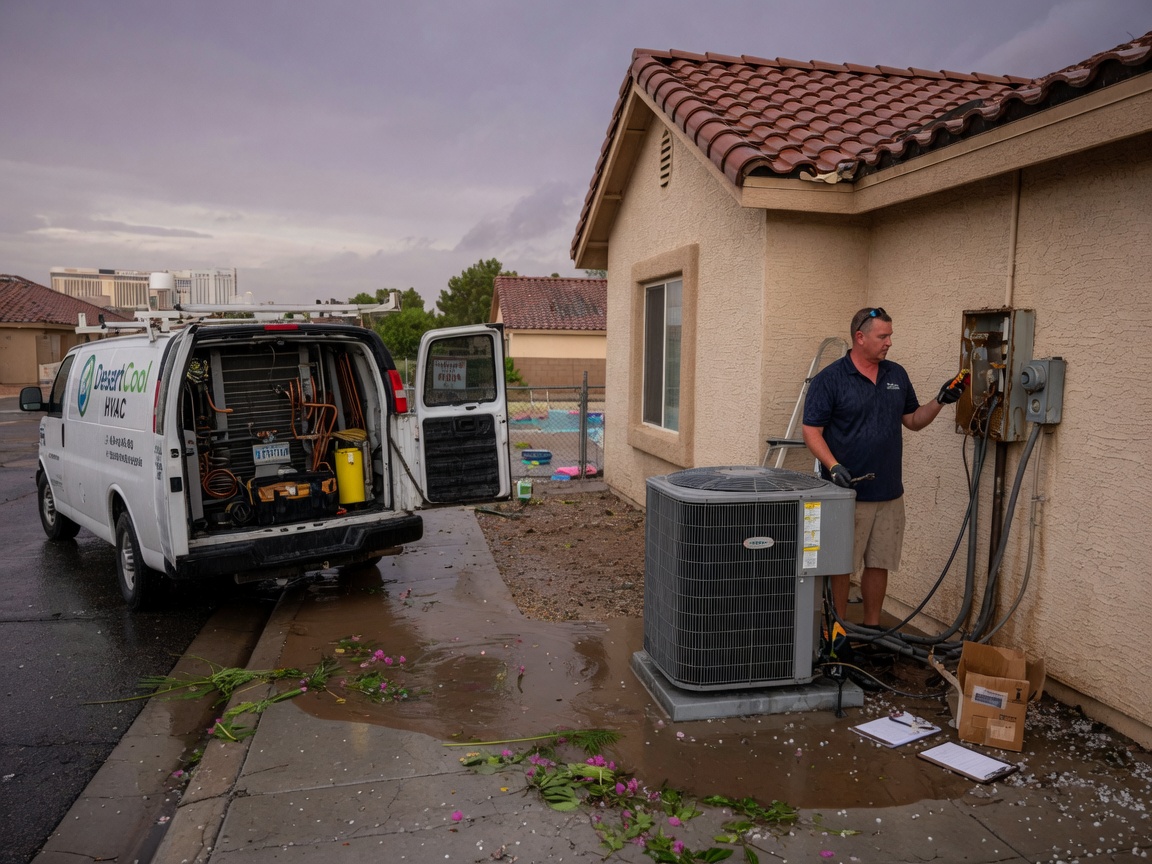
AC repair timing after monsoon storms in Southern Nevada typically stretches from 24 hours for straightforward fixes to 4–7 days when demand surges and parts sourcing slows in Clark County. Heavy rains, dust, and lightning hit systems hard during the brief but intense monsoon season, and the hot desert climate leaves little room for downtime before indoor temperatures climb again.
Debris and Water Intrusion After Heavy Rains
Monsoon downpours often dump inches of rain in under an hour, sending mud and debris into outdoor units across Summerlin and Spring Valley. Condensers sitting low to the ground collect leaves, sand, and silt that block coils and strain fans. In neighborhoods with older single-story homes, runoff from flat roofs can pool around equipment pads, leading to corrosion on contactors and capacitors within days. Technicians see these units fail days after the storm passes because trapped moisture accelerates wear on already heat-stressed components. Clearing the debris and drying the electrical compartment usually takes priority before any deeper diagnostics begin.
Lightning Surges and Electrical Component Failures
Lightning strikes near the Las Vegas Strip or Fremont Street Experience frequently trip breakers and fry control boards in nearby residential areas. The same storms that bring rain also generate power fluctuations that damage capacitors and contactors on 8–12-year-old systems common in Sunrise Manor and Centennial Hills. When a surge hits, the unit may run intermittently or shut down completely, forcing owners to wait for replacement parts that must be ordered from suppliers outside Clark County. Scheduling these jobs often shifts to the back of the line once multiple calls report identical electrical failures on the same day.
Post-Storm Demand Spikes Across Service Routes
After a strong monsoon cell moves through, call volume rises sharply in The Strip corridor, Downtown Las Vegas, and Enterprise as residents notice weak airflow or warm air from their vents. Technicians based at 2300 N Rainbow Blvd Ste Pad 2S cover routes that stretch from Lone Mountain to Boulder City, and the sudden overlap of jobs means some appointments slide from same-day to next-day or later. Desert dust stirred by the storms also clogs filters faster than normal, which ties directly into the patterns described in How Desert Dust Affects AC Filters In The Las Vegas Valley. Shops that stay open 24/7 can absorb more of these calls, yet the sheer number of affected systems still creates measurable delays.
How Housing Stock and Terrain Affect Repair Speed
Many homes in Spring Valley and Arts District date from the 1980s and 1990s, with original equipment still in place and limited clearance around condensing units. Narrow side yards and shared walls in townhomes slow access for larger repair tools or replacement coils. Terrain near Red Rock Canyon funnels wind and dust into western neighborhoods, depositing extra grit on coils that must be rinsed before testing. These site-specific conditions add 30–90 minutes per job compared with newer builds in Centennial Hills, pushing the overall timeline for completing a full route further out.
Planning Repairs Around Monsoon Season Realities
Homeowners who schedule AC Repair before the first monsoon cell arrives reduce the chance of multi-day waits. Checking Common AC Issues During Las Vegas Summer Heat Spikes helps identify weak capacitors or clogged drains that storms will expose. Keeping a spare filter on hand and clearing vegetation two feet around the unit cuts the most common post-storm service triggers. When a system does fail, calling early in the day and describing visible debris or recent lightning activity lets dispatchers match the right technician and parts on the first visit.